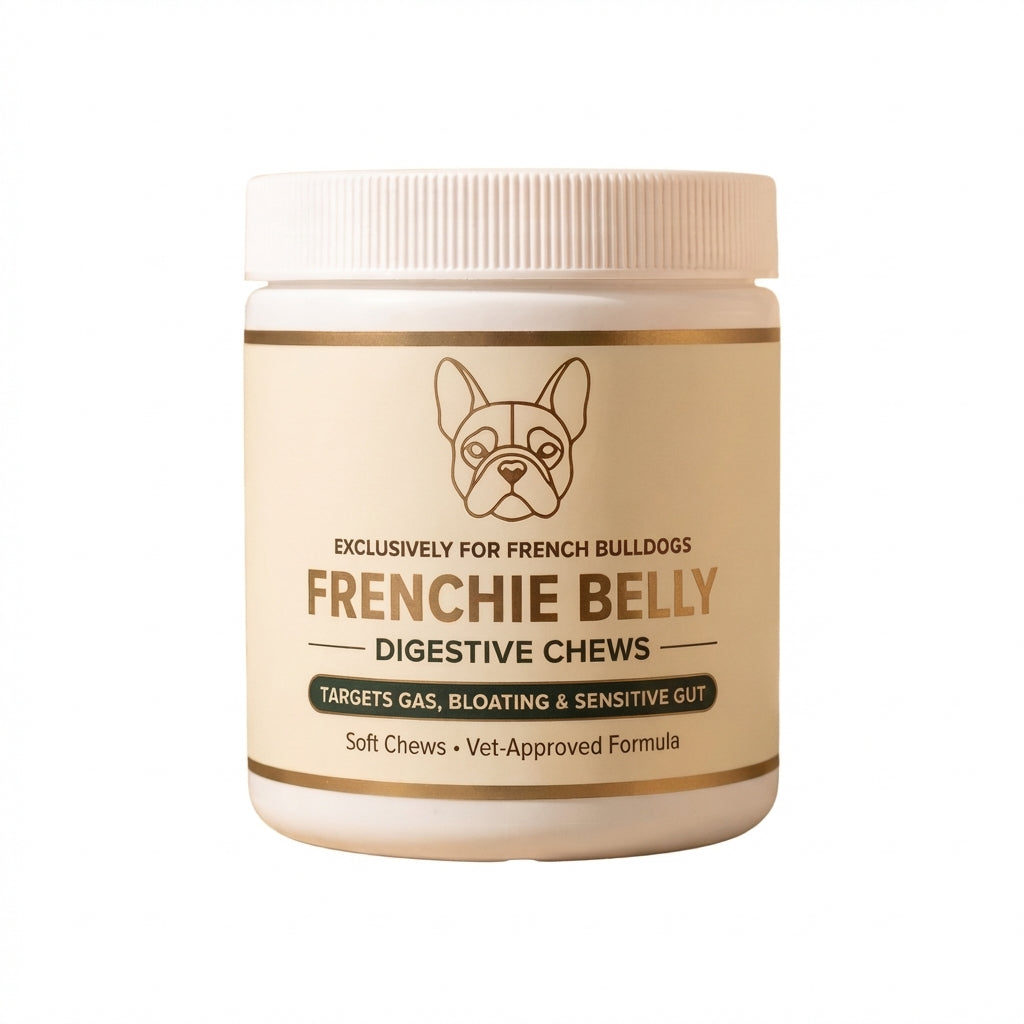
Why Breed-Specific Supplements Matter for French Bulldogs

Key Takeaways
- 72.4% of French Bulldogs have at least one health disorder — generic supplements can't address this breed's unique constellation of digestive, skin, joint, and respiratory issues
- A genuinely breed-specific formula includes multi-strain probiotics (1-5B CFU), digestive enzymes, omega-3s, and avoids common Frenchie allergens like chicken and wheat
- Use the 5-point test to separate real breed-specific supplements from marketing gimmicks with a Frenchie on the label
- The 20-40% premium on breed-specific supplements is often cheaper than managing chronic conditions reactively with vet visits and prescriptions
In This Article
- The French Bulldog Health Profile: Why This Breed Is Different
- Generic Supplements vs. Breed-Specific Formulas: What's Actually Different?
- The 6 Key Ingredients French Bulldogs Need (And Why)
- Ingredients to Avoid in French Bulldog Supplements
- How to Evaluate a "Breed-Specific" Supplement (The 5-Point Test)
- The Cost Argument: Are Breed-Specific Supplements Worth the Premium?
- What the Research Actually Says About Breed-Specific Nutrition
- Building a Complete Supplement Protocol for Your Frenchie
If you browse the supplement aisle at any pet store, you'll find dozens of "all-breed" digestive supplements, joint chews, and multivitamins. They all promise the same thing: better health for your dog. But here's the uncomfortable truth — a supplement formulated for a 70-pound Labrador isn't addressing the same problems as a 25-pound French Bulldog. The breeds have fundamentally different health profiles, and a one-size-fits-all approach leaves breed-specific vulnerabilities completely unaddressed.
This guide explains why French Bulldogs need targeted supplementation, which ingredients actually matter for the breed, and how to tell a genuinely breed-specific formula from a marketing gimmick with a Frenchie on the label.
The French Bulldog Health Profile: Why This Breed Is Different
French Bulldogs are one of the most health-challenged breeds in existence. A landmark study by the Royal Veterinary College (RVC) in 2024 analyzed over 44,000 dogs and found that 72.4% of French Bulldogs had at least one documented health disorder — significantly higher than the average for all breeds. More critically, Frenchies showed elevated odds for 20 out of 43 common disorders studied.
This isn't bad luck — it's anatomy and genetics. The health issues that plague French Bulldogs are directly connected to their physical structure:
- Brachycephalic Obstructive Airway Syndrome (BOAS) — affects an estimated 50% or more of French Bulldogs. The shortened skull compresses the airway, leading to chronic breathing difficulty, exercise intolerance, and secondary GI problems from constant air swallowing.
- Gastrointestinal disorders — chronic diarrhea, vomiting, and gastroesophageal reflux rank among the top 5 most common Frenchie health issues. The negative thoracic pressure from labored breathing literally pulls stomach acid upward.
- Skin allergies and atopic dermatitis — French Bulldogs have some of the highest allergy rates of any breed. Their skin fold anatomy creates warm, moist environments where bacterial and yeast infections thrive.
- Joint and spinal issues — intervertebral disc disease (IVDD), luxating patella, and hip dysplasia are all overrepresented in the breed. Their compact, heavy-fronted body puts disproportionate stress on joints and vertebrae.
- Food sensitivities — chicken, beef, and dairy are the most common triggers. Immune hyperreactivity in the breed means food proteins that other breeds handle easily can provoke inflammatory responses in both the gut and skin.
A generic supplement can't address this constellation of interconnected issues. A French Bulldog doesn't just need "digestive support" — they need digestive support that accounts for aerophagia, immune-mediated food reactions, and a gut-skin axis that amplifies inflammation in both directions.
Generic Supplements vs. Breed-Specific Formulas: What's Actually Different?
The term "breed-specific" gets thrown around loosely in pet supplements. Some products simply put a picture of a French Bulldog on the label without changing the formula. Others make genuine formulation decisions based on breed health data. Here's how to tell the difference:
What a Generic Supplement Looks Like
A typical all-breed digestive supplement might contain a single probiotic strain (usually Enterococcus faecium), a basic prebiotic fiber, and perhaps some pumpkin powder. The dosing is calculated for a vague "small to medium dog" range. The formula addresses the most common digestive complaint across all breeds: occasional loose stool.
This approach isn't wrong — it's just incomplete for a French Bulldog. It doesn't address aerophagia-related bloating, doesn't include anti-inflammatory compounds for the gut-skin connection, doesn't account for the breed's elevated need for digestive enzymes, and uses a CFU count that may be insufficient for a breed prone to chronic dysbiosis.
What a Genuinely Breed-Specific Formula Does
| Component | Generic Formula | French Bulldog Formula |
|---|---|---|
| Probiotic strains | 1-2 strains, 100M-500M CFU | 3-5 strains including B. coagulans (spore-forming, survives stomach acid), 1-5B CFU |
| Digestive enzymes | Usually absent | Protease, lipase, amylase, cellulase — critical for breeds with impaired digestion |
| Anti-inflammatory | Not included | Omega-3 (EPA/DHA from fish oil), turmeric/curcumin for gut-skin axis support |
| Prebiotic fiber | Basic FOS or inulin | FOS + pumpkin fiber + psyllium for comprehensive prebiotic coverage |
| Gas/bloat support | Not addressed | Ginger root, fennel, or simethicone derivatives for aerophagia-related gas |
| Allergen profile | May contain chicken, wheat, soy, dairy | Free from common Frenchie allergens — no chicken, wheat, corn, soy |
| Joint support | Separate product required | Glucosamine, chondroitin, or MSM included for breed-relevant joint protection |
The key differentiator isn't one magic ingredient — it's the overall formulation philosophy. A breed-specific supplement for French Bulldogs addresses the interconnected nature of their health issues rather than targeting a single symptom in isolation.
The 6 Key Ingredients French Bulldogs Need (And Why)
1. Multi-Strain Probiotics (1-5 Billion CFU)
French Bulldogs are genetically predisposed to gut dysbiosis — an imbalance between beneficial and harmful bacteria in the digestive tract. This isn't a temporary condition that resolves itself; it's a chronic breed vulnerability that requires ongoing management.
The probiotic strains with the strongest evidence for canine digestive health are Enterococcus faecium (EFSA-approved, reduces acute diarrhea by up to 50%), Lactobacillus acidophilus (strengthens intestinal barrier), and Bacillus coagulans (spore-forming, meaning it survives stomach acid and doesn't require refrigeration). A multi-strain formula provides broader coverage because different strains colonize different segments of the GI tract.
Why breed-specific matters here: Frenchies need higher CFU counts than most breeds because their chronic aerophagia and immune reactivity create a more hostile gut environment. The 100 million CFU dose in FortiFlora (adequate for many breeds) may not be sufficient for a French Bulldog with active dysbiosis.
2. Digestive Enzymes
Digestive enzymes — protease (breaks down protein), lipase (breaks down fat), amylase (breaks down starch), and cellulase (breaks down plant fiber) — are the most underrated supplement category for French Bulldogs.
Brachycephalic breeds often have impaired mechanical digestion. Because they swallow food rapidly (partly due to breathing difficulty during eating) and gulp excess air, food arrives in the stomach less chewed and mixed with more gas than in long-snouted breeds. Supplemental enzymes compensate for this by helping break down food more completely, which reduces undigested material reaching the large intestine — a primary cause of gas and bloating.
For Frenchies at risk of or diagnosed with exocrine pancreatic insufficiency (EPI), enzyme supplementation transitions from helpful to medically necessary. EPI means the pancreas doesn't produce enough of its own enzymes, leading to malabsorption, weight loss despite eating, and large volumes of pale fatty stool.
3. Omega-3 Fatty Acids (EPA and DHA)
Omega-3s are anti-inflammatory powerhouses, and French Bulldogs need them for two interconnected reasons: skin health and gut health.
The gut-skin axis is a bidirectional communication pathway. Inflammation in the gut triggers skin flare-ups (itching, redness, hot spots), and chronic skin inflammation sends pro-inflammatory signals back to the gut. French Bulldogs sit at the epicenter of this cycle because they're genetically prone to both atopic dermatitis and GI inflammation.
EPA and DHA from marine sources (fish oil, algae oil) reduce inflammatory cytokines in both the skin and the GI tract. Studies show that dogs supplemented with omega-3s show measurable reductions in pruritus (itching) scores and improved coat quality within 4-8 weeks. For French Bulldogs specifically, omega-3 supplementation addresses the root inflammatory mechanism rather than just masking symptoms with antihistamines.
Target: 75-100mg combined EPA/DHA per kilogram of body weight daily. For a 12kg (26lb) Frenchie, that's 900-1200mg total omega-3 per day. Look for supplements that specify EPA and DHA content separately — total "fish oil" doesn't tell you the actual omega-3 dose.
4. Prebiotic Fiber Complex
Prebiotics feed the probiotic bacteria you're introducing. Without them, probiotic supplementation is like planting seeds in dry soil. The most effective approach uses multiple prebiotic sources:
- Fructooligosaccharides (FOS) — selectively feeds Bifidobacterium species. Research suggests 0.45% of total diet as FOS (roughly 0.9g daily for a typical Frenchie) produces measurable microbiota improvements.
- Inulin — derived from chicory root, one of the most-studied prebiotics for dogs. Supports overall microbial diversity.
- Pumpkin fiber — acts as both a prebiotic and a stool-firming agent. The pectin content helps with both diarrhea and mild constipation.
- Psyllium husk — soluble fiber that supports probiotic colonization and improves stool consistency.
5. Glucosamine and Joint Support Compounds
You might wonder what joint support has to do with a digestive supplement. For French Bulldogs, the connection is practical rather than physiological: the breed needs both digestive and joint support, and combining them into fewer daily supplements improves owner compliance.
French Bulldogs are prone to intervertebral disc disease (IVDD), luxating patella, and hip dysplasia. Their compact, muscular build with a heavy head puts significant stress on the spine and weight-bearing joints. Glucosamine hydrochloride (500-1000mg daily), chondroitin sulfate (200-400mg daily), and MSM (methylsulfonylmethane) are the three most-studied joint support compounds in dogs, with evidence showing they can slow cartilage degradation and reduce joint inflammation.
A well-designed breed-specific supplement includes these alongside digestive ingredients so owners don't need to manage 4-5 separate supplements daily — which in practice means at least one gets forgotten.
6. Natural Anti-Gas Compounds
Generic supplements ignore this category entirely because most breeds don't need it. French Bulldogs do — their chronic aerophagia (air swallowing from brachycephalic breathing) means gas is a daily reality, not an occasional inconvenience.
Evidence-supported natural anti-gas ingredients include:
- Ginger root extract — promotes gastric motility, helping trapped air move through the GI tract rather than accumulating. Also has anti-nausea properties.
- Fennel seed — traditional carminative (anti-gas) herb with growing veterinary support. Relaxes smooth muscle in the GI tract, allowing gas to pass more easily.
- Yucca schidigera extract — doesn't reduce gas volume but binds to sulfur compounds, significantly reducing the smell of flatulence. Practically useful for Frenchie owners.
Ingredients to Avoid in French Bulldog Supplements
What's not in a supplement matters as much as what's in it. French Bulldogs have the highest food allergy rates of any brachycephalic breed, so supplement fillers and additives can actively undermine the product's benefits.
- Chicken or chicken liver flavor — the single most common food allergen in French Bulldogs. Many "all-breed" supplements use chicken liver as a palatability enhancer. For a chicken-allergic Frenchie, this means the digestive supplement itself is causing digestive problems.
- Wheat, corn, and soy — common fillers that add volume without adding value. All three are among the top allergens in dogs and can trigger both GI and skin reactions.
- Dairy-based ingredients — many dogs are lactose intolerant. Whey protein and milk powder appear in some supplements as binding agents.
- Artificial colors and preservatives — BHA, BHT, and artificial dyes serve no health purpose and can irritate sensitive GI tracts.
- Added sugar or maltodextrin — sugar feeds pathogenic bacteria, directly counteracting the probiotics in the same supplement. Maltodextrin is a common hidden sugar used as a processing aid.
- Proprietary blends with hidden doses — if the label says "digestive blend: 500mg" without breaking down how much of each ingredient is included, you have no way to know if any single ingredient is present in an effective dose.
How to Evaluate a "Breed-Specific" Supplement (The 5-Point Test)
Not every product with a French Bulldog on the label is genuinely breed-specific. Use this quick evaluation framework:
- Does it name specific probiotic strains? — Genus + species minimum (e.g., Enterococcus faecium). "Contains probiotics" without strain names is a red flag.
- Does it include digestive enzymes? — A supplement claiming to address French Bulldog digestion without protease, lipase, or amylase is incomplete.
- Is it free from common Frenchie allergens? — Check the inactive ingredients for chicken, wheat, corn, soy, and dairy. If any are present, it wasn't formulated with French Bulldogs in mind.
- Does it address more than one breed-specific issue? — Digestion + skin or digestion + joint support suggests genuine breed targeting. A single-benefit formula with a Frenchie on the label is likely just marketing.
- Does it disclose CFU count at expiration? — Probiotics die over time. "5 billion CFU at manufacture" could mean 500 million by the time your dog takes it. Look for guarantees "through best-by date."
A product that passes all 5 checks is likely a genuinely thoughtful breed-specific formulation. Three or fewer passes, and you're probably paying a premium for packaging, not formulation.
The Cost Argument: Are Breed-Specific Supplements Worth the Premium?
Breed-specific supplements typically cost 20-40% more than generic alternatives. Is that premium justified?
Consider the alternative costs:
- Vet visits for chronic digestive issues: $150-400 per visit, often repeating every few months
- Prescription diets (Royal Canin HP, Hill's z/d): $80-120 per bag vs. $40-60 for standard kibble
- Allergy testing and elimination diets: $200-500 for testing, plus months of expensive novel protein foods
- Medications for skin infections secondary to gut inflammation: $50-200 per course of antibiotics or antifungals
- Multiple separate supplements (probiotic + omega-3 + joint + enzyme): $60-120/month combined vs. $30-50 for a comprehensive breed-specific product
When you factor in the downstream costs of not addressing breed-specific vulnerabilities proactively, the 20-40% premium on a targeted supplement is often the most cost-effective approach — especially compared to managing chronic conditions reactively with vet visits and prescription treatments.
What the Research Actually Says About Breed-Specific Nutrition
The concept of breed-specific nutrition is still emerging in veterinary science, but the foundational evidence is solid. A growing body of research shows that different breeds have distinct microbiome compositions, metabolic rates, and nutrient requirements.
A 2020 study in Frontiers in Veterinary Science demonstrated that an 8-strain probiotic formula (Slab51) produced measurable immune stimulation and favorable microbiota shifts in dogs — but the responses varied by individual, with brachycephalic breeds showing different baseline profiles. The researchers noted that "the diversity and composition of the gut microbiota is influenced by host genetics, diet, and environmental factors" — supporting the case for breed-tailored approaches.
Separately, veterinary nutritionists increasingly recognize that breeds with known health predispositions benefit from targeted supplementation. The American College of Veterinary Internal Medicine has acknowledged that brachycephalic breeds face unique GI challenges that may respond to specific dietary interventions, including enzyme supplementation and targeted probiotic support.
The practical evidence from Frenchie owners reinforces the clinical data. On Reddit's r/FrenchBulldogs, the most upvoted supplement recommendations consistently feature breed-aware products over generic alternatives, with owners reporting faster and more consistent results from formulas designed for flat-faced breeds.
Building a Complete Supplement Protocol for Your Frenchie
If a single breed-specific supplement doesn't cover everything your Frenchie needs, here's a practical daily protocol:
- Morning meal: Breed-specific digestive supplement (probiotics + enzymes + prebiotic fiber) sprinkled on food
- Evening meal: Omega-3 fish oil (liquid or capsule pierced and drizzled on food) — giving it with food improves absorption of the fat-soluble EPA/DHA
- Daily treat: Glucosamine chew for joint support (if not included in the digestive supplement)
- As needed: Plain canned pumpkin (1-2 teaspoons) during digestive flare-ups for additional fiber support
The goal is a maximum of 2-3 daily supplements — any more, and compliance drops. Most owners find they can maintain a two-supplement routine long-term: one comprehensive digestive product and one omega-3 source. Adding a third (joint support) is warranted for Frenchies over 3 years old or those showing early mobility issues.
Start any new supplement gradually — quarter dose for the first 3 days, half dose for days 4-7, then full dose. Even beneficial ingredients can cause temporary GI adjustment in a sensitive breed. And always introduce one new supplement at a time, with at least 2 weeks between additions, so you can identify which products your Frenchie tolerates well and which might be causing reactions.