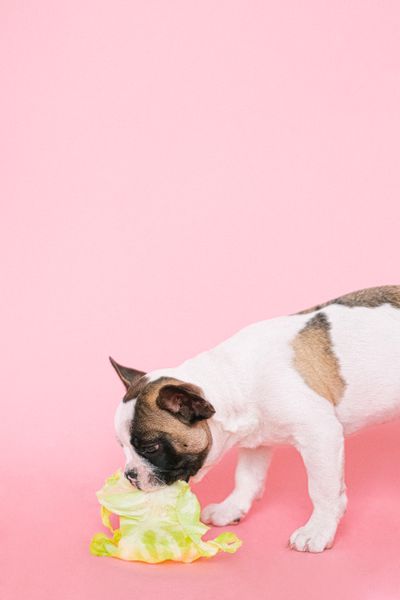
French Bulldog Puppy Stomach Guide: Digestion From 0-12 Months

Key Takeaways
- Feed your breeder's food for the first 2 weeks — don't add relocation stress plus food change stress simultaneously
- Use a slow feeder bowl from day one — it's the single most impactful long-term intervention for Frenchie gas and bloating
- Start probiotics at 8 weeks to support microbiome development during the critical first-year window
- Bloody diarrhea in an unvaccinated puppy is a parvovirus emergency — don't wait and see
You brought home your French Bulldog puppy, and within 48 hours you're googling "is it normal for a Frenchie puppy to vomit this much?" The answer is complicated: some digestive upset is genuinely normal during puppyhood, but French Bulldog puppies experience GI issues at rates that would be abnormal in almost any other breed. Knowing what's expected, what's concerning, and what's an emergency can save you thousands in unnecessary vet visits — and catch real problems before they become serious.
This guide covers everything from 8 weeks to 12 months: feeding schedules, common digestive issues at each age, how to build a healthy gut from the start, and the warning signs that something needs veterinary attention.
The French Bulldog Puppy Digestive System: What Makes It Different
All puppies have immature digestive systems. French Bulldog puppies have immature digestive systems plus the full suite of brachycephalic breed complications that are already present from birth:
- Aerophagia from day one — stenotic nares (narrowed nostrils) and elongated soft palate are congenital, meaning your puppy is swallowing excess air from their very first meals. Gas and bloating are normal from the start.
- Developing microbiome — a puppy's gut bacteria are still establishing. The microbiome isn't fully mature until around 6-12 months. During this window, it's highly susceptible to disruption from dietary changes, stress, antibiotics, and environmental bacteria.
- Rapid growth demands — French Bulldog puppies need higher caloric density and more protein per pound of body weight than adults. Their digestive system must extract maximum nutrition from every meal while still developing the capacity to do so efficiently.
- Vaccine and deworming stress — the vaccination schedule (8, 12, 16 weeks) and deworming protocols frequently cause temporary GI upset. This is normal but can be alarming for first-time Frenchie owners.
- Teething (3-7 months) — teething puppies swallow more saliva, chew on everything (including bacteria-laden objects), and may eat irregularly. All of this affects digestion.
Feeding Schedule by Age
French Bulldog puppies need more frequent meals than adults because their small stomachs can't hold enough food to meet their energy needs in one or two sittings:
| Age | Meals per Day | Portion Size | Key Notes |
|---|---|---|---|
| 8-12 weeks | 4 meals | 1/4 to 1/3 cup per meal | Same food breeder was using. Don't change anything yet. |
| 3-4 months | 3-4 meals | 1/3 cup per meal | Can begin transitioning to your chosen food (gradually over 10-14 days). |
| 4-6 months | 3 meals | 1/3 to 1/2 cup per meal | Growth is rapid. Monitor weight — should feel ribs but not see them. |
| 6-9 months | 2-3 meals | 1/2 cup per meal | Growth rate slowing. Begin reducing meal frequency. |
| 9-12 months | 2 meals | Per food package guidelines, adjusted for body condition | Approaching adult feeding schedule. Transition to adult food at 10-12 months. |
Critical rule: When your puppy first comes home (8-12 weeks), feed the exact same food the breeder was using, even if you plan to switch. The stress of a new home is already disrupting their gut — adding a food change on top of relocation stress is the fastest path to diarrhea. Wait at least 2 weeks after bringing your puppy home before beginning any food transition.
Common Digestive Issues by Age
8-12 Weeks: The Settling-In Phase
This is the highest-risk period for digestive upset because your puppy is dealing with three simultaneous stressors: new environment, first vaccinations, and the developmental immaturity of their GI tract.
Normal at this age:
- Soft stools for the first 3-5 days in a new home (stress colitis)
- Occasional vomiting after eating too fast or too much
- Hiccups (very common in Frenchie puppies — related to aerophagia and diaphragm development)
- Gas — often surprisingly loud and smelly for such a small dog
Not normal — see a vet:
- Bloody diarrhea (potential parvovirus — emergency, especially if unvaccinated)
- Vomiting more than 2-3 times in 24 hours
- Complete food refusal for more than 12 hours (puppies this young are at risk of hypoglycemia)
- Lethargy with GI symptoms — puppies should be energetic between digestive episodes
- Pot-bellied appearance with weight loss (parasites — roundworms, hookworms)
Action items:
- Feed the breeder's food, same schedule, same portions
- Use a slow feeder bowl from the start — establishing this habit early prevents lifelong aerophagia issues
- Keep fresh water available at all times
- Bring a stool sample to your first vet visit for parasite screening
3-4 Months: Vaccinations and First Food Transition
Your puppy is receiving their core vaccination series (DHPP boosters at 12 and 16 weeks). Vaccines temporarily stimulate the immune system, which can cause 24-48 hours of mild GI upset — reduced appetite, soft stools, lethargy. This is normal post-vaccination behavior and should resolve within 2 days.
This is also when most owners do their first food transition — from the breeder's food to their chosen brand. Use the 14-day extended transition protocol for puppies. Their developing microbiome is less resilient to sudden dietary changes than an adult's.
Deworming protocol: Your vet will typically deworm at 8, 10, 12, and 16 weeks. Deworming medication can cause temporary soft stools, mild vomiting, or decreased appetite for 24-48 hours. You may also see worms in the stool after deworming — this is actually a sign the medication is working.
4-6 Months: Teething and Exploratory Eating
Between 4-6 months, your Frenchie puppy is teething (losing baby teeth, growing adult teeth) and exploring the world with their mouth. Both affect digestion:
- Teething pain can cause decreased appetite, drooling, and irregular eating patterns. Frozen carrots or frozen wet food in a Kong can soothe sore gums while providing nutrition.
- Foreign body risk peaks during this age. Frenchie puppies eat everything: socks, toy parts, rubber pieces, rocks, sticks. Intestinal foreign bodies are a surgical emergency. If your puppy suddenly vomits repeatedly, stops eating, and shows abdominal pain, get to a vet immediately for X-rays.
- Coprophagia (poop eating) is common in puppies this age. While often behavioral (curiosity, boredom), it can also indicate nutrient deficiency or enzyme insufficiency. If it persists past 6 months, discuss with your vet.
6-9 Months: Adolescent Gut Maturation
The gut microbiome is approaching maturity. Digestive issues should be decreasing in frequency and severity compared to earlier months. If your Frenchie puppy is still having chronic digestive problems at this age, it's time to investigate underlying causes rather than attributing everything to "puppy tummy."
This is when food allergies may first appear. The immune system has had enough exposure to common proteins (chicken, beef) to develop sensitization. If your 6-9 month Frenchie develops chronic ear infections, itchy paws, and concurrent loose stools that don't resolve with dietary management, start discussing an elimination diet trial with your vet.
Growth slows but doesn't stop. French Bulldogs typically reach their adult height by 9-12 months but continue filling out (adding muscle) until 12-14 months. Caloric needs begin decreasing — overfeeding during this transition is a common cause of digestive upset and unhealthy weight gain.
9-12 Months: Transition to Adulthood
Your Frenchie puppy is approaching adult size and their digestive system should be functioning close to its adult capacity. This period involves two important transitions:
1. Puppy food to adult food — use the standard 10-day transition protocol. Puppy food has significantly higher protein, fat, and calcium content. Switching to adult food reduces caloric density to match the slower growth rate. Don't rush this based on a calendar date — wait until your vet confirms growth plates are closing.
2. Meal frequency — most Frenchies can move to twice-daily feeding by 9-10 months. Avoid dropping to once daily — French Bulldogs are prone to bile reflux vomiting on single-meal schedules, and twice-daily feeding is better for GERD management throughout their lives.
Building a Healthy Gut From the Start
The interventions you make during puppyhood have lasting effects on your Frenchie's adult digestive health. Here's how to set the foundation:
Start Probiotics Early
Puppies can begin probiotics as early as 8 weeks. Use a puppy-appropriate product with lower CFU count (500 million to 1 billion) or a general canine probiotic at half the adult dose. Starting early helps establish a diverse, balanced microbiome during the critical development window when gut bacteria populations are still forming.
Probiotics are especially valuable during vaccination weeks, after deworming, and during any antibiotic course (which is common for Frenchie puppies with skin fold infections or respiratory issues).
Slow Feeder Bowl from Day One
This is one of the most impactful single interventions for a French Bulldog puppy. A slow feeder reduces air swallowing (aerophagia) by forcing the puppy to eat smaller bites and breathe between them. Puppies trained on slow feeders from 8 weeks develop slower eating habits that persist into adulthood. The result: less gas, less bloating, less regurgitation — for life.
Establish Consistent Meal Times
Feed at the same times every day. Consistent meal timing trains the GI tract to produce digestive enzymes on schedule, optimizing digestion. Irregular feeding causes enzyme production to be reactive rather than proactive, leading to less efficient digestion.
Avoid Table Scraps and Random Treats
Every new food your puppy encounters is a potential microbiome disruption. During the first 6 months, stick to the chosen kibble and a maximum of 1-2 simple, single-ingredient treats (freeze-dried liver, plain training treats). Variety is the enemy of a developing digestive system.
Keep a Puppy Digestive Log
For the first 6 months, track daily: what was fed, stool quality (use Purina Fecal Score 1-7), any vomiting or gas, and anything unusual eaten. This log becomes invaluable if digestive issues develop later — it provides a baseline and may reveal patterns (certain treats causing problems, post-vaccine reactions, stress-related episodes).
When to Worry: The Puppy Emergency Checklist
Puppies are more vulnerable than adults. Things that might be "wait and see" in an adult dog can be emergencies in a puppy:
- Bloody diarrhea — parvovirus until proven otherwise, especially in unvaccinated or partially vaccinated puppies. This is a life-threatening emergency.
- Vomiting + inability to keep water down — dehydration develops rapidly in puppies. Seek care within hours, not days.
- Pot-bellied appearance — heavy parasite load (roundworms, hookworms) or more rarely, a congenital liver shunt.
- Not eating for more than 12 hours — puppies under 4 months are at risk of hypoglycemia (dangerously low blood sugar). If your puppy won't eat and is lethargic, rub honey or sugar water on their gums and go to the vet immediately.
- Repeated vomiting + belly guarding — possible foreign body obstruction. X-rays needed.
- Regurgitation starting suddenly — in a young Frenchie, new-onset regurgitation can indicate congenital hiatal hernia or megaesophagus. Both require diagnosis.
- Weight loss or failure to gain weight — puppies should gain weight consistently. If your Frenchie puppy is eating normally but not gaining (or losing weight), investigate for EPI, parasites, or congenital GI issues.
Supplements for French Bulldog Puppies
Keep it simple during puppyhood — fewer is better:
| Supplement | When to Start | Why |
|---|---|---|
| Probiotic | 8 weeks | Supports developing microbiome, helps during vaccine/deworming stress |
| Omega-3 (fish oil) | 12 weeks | Supports brain development (DHA), skin health, anti-inflammatory |
| Pumpkin puree | As needed | Natural stool firmer and prebiotic — use during soft stool episodes |
| Joint supplement | 6-9 months | Preventive support for a breed prone to IVDD and joint issues |
What NOT to supplement in puppies: Calcium (puppy food already provides adequate amounts — excess calcium can cause skeletal development problems in growing dogs), adult-dose vitamins (risk of oversupplementation), and any supplement containing common allergens (chicken liver, wheat) until you know your puppy's allergy profile.
The Breeder Handoff: Questions to Ask
The information you get from your breeder during pickup directly impacts your puppy's digestive health in the critical first weeks. Ask these questions before leaving:
- What exact food are you feeding? — get the brand, formula name, and specific variant. "Purina" isn't enough — you need "Purina Pro Plan Puppy Sensitive Skin & Stomach Salmon & Rice," for example. Buy a bag before pickup day.
- How much per meal, how many meals per day? — replicate the breeder's exact schedule for the first 2 weeks.
- Any digestive issues in the litter? — if siblings had GI problems, your puppy may be predisposed.
- What deworming has been done? — know which medications were given and when, so your vet can continue the schedule properly.
- Have the parents had food allergies? — food allergy predisposition has a genetic component. If a parent is chicken-allergic, monitor your puppy's response to chicken closely.
The first year of a French Bulldog's life sets the digestive foundation for everything that follows. Invest in building a healthy gut now — slow feeder, consistent meals, early probiotics, minimal dietary disruption — and you'll spend significantly less time and money managing digestive problems in the years ahead.